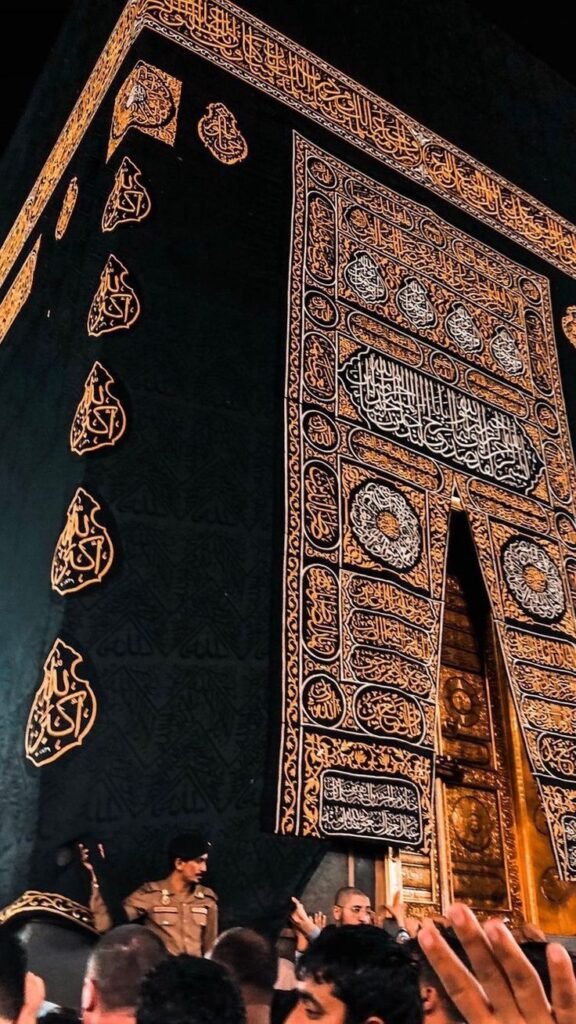
The Umrah trip is a spiritual one, a physical and emotional transformation of the banal to the sublime. The ultimate form of devotion to millions of Muslims is visiting the Holy City of Mecca. This is not however a mere journey of getting somewhere. It is the process of getting into the right state of existence, physically and spiritually.
Before a pilgrim can even see the Kaaba, the pilgrim has to pass through a rite of passage that is crucial and is known as the Miqat. These are the special stations which act as the gate to the normal world and the refuge of Haram. An appreciation of these limits is not only a geographical issue, but a pre-requisite of the validity of your pilgrimage. These checkpoints are important to pay attention to or be misunderstood causing expensive errors, financially and spiritually. This is a guide on what you must know before you embark on the pilgrimage to make the start of your journey perfect.
The Miqat in Umrah is supposed to act as the spiritual and physical boundary in which a pilgrim enters Ihram state. It is the place where the worldly position, style and comforts of everyday life are left behind in favor of two plain white cloths, and one purpose. The pilgrim recognizes the holiness of the Holy City to which he/she is heading by stopping at the Miqat. It will make a traveler a Mu'tamir (pilgrim), so that nobody comes to the House of Allah without the humility and purity, which the Islamic tradition demands.
Defining the Miqat: Spatial vs. Temporal
Miqat is a term that is mainly used in the Islamic jurisprudence to mean specified time or place. Scholars divide these boundaries into two types when speaking about pilgrimage: Miqat Makani (Spatial) and Miqat Zamani (Temporal).
Temporal Miqat in the case of Umrah is a free one. Unlike Hajj that must be performed on specific days of the Islamic month of Dhul-Hijjah, Umrah may be performed any time of the year. This is due to its flexibility since the Muslims can visit the Holy House at their convenient time when they can afford and when they can have time. Affordable Umrah Package from USA enables many people to complete this spiritual pilgrimage and gives them an opportunity to experience travelling without considering money problem.
Spatial Miqat on the other is fixed. These are some of the geographical regions which were established by the Prophet Mohammed (PBUH). All pilgrims must pass at least one of these stations on their way to Ihram outside of Mecca. These lines are broken without the intention of Umrah and inappropriate dressing requires the pilgrim to remake to the boundary or make a sacrifice of something to be sacrificed.
The Five Stations of Miqat
Mecca has five major Miqat stations. The station you enter will be entirely dependent on the direction, which you are approaching. You will usually be flying within one of these zones even when you are on the air.
Dhul Hulaifah (Abyar Ali)
This is the most distant Miqat to the Holy City being only some 450 kilometers north of Mecca and only 9 kilometers south of Medina. It is the allocated point of the people of Medina and the ones passing by it. Dhul Hulaifah is possibly the most visited Miqat because most pilgrims come to visit the Mosque of the Prophet in Medina before visiting Mecca. It satisfies the extensive requirements of bathing and prayer, thus rendering the movement to Ihram easy with a number of people.
Al-Juhfah (Rabigh)
The modern point of reference of this Miqat is more or less the city of Rabigh that is a few kilometers away in the historical context in the surrounding of a pre-historic village. It is located some 183 kilometers north west of Mecca. The pilot population of this station consists of pilgrims to Syria, Egypt, Morocco and Levant. It is also a tourist attraction site to pilgrims currently which do not necessarily travel through Medina especially pilgrims residing in North Africa and even parts of Europe.
Qarn al-Manazil (As-Sail Al-Kabir)
This is Miqat of individuals of Najd (Central Saudi Arabia, including Riyadh) and Taif that are approximately 75 kilometers east of Mecca. It is also used by pilgrims who are commuting in the UAE and the Gulf countries of Kuwait and Qatar. It is a second, not far away towards the eastward of which is called Wadi Muharram, and frequented by people who take the mountainous road one after the other, and who pass Taif on their way.
Yalamlam (Sa'adiyah)
This station benefits people who are heading towards south, that is, Yemen. Yalamlam is the specified location of the pilgrims of Yemen and South Africa, Nigeria, and other southern countries, which are about 92 kilometers south of Mecca. The place is today denoted by the Sa’adiyah area.
Dhat Irq
It is a Miqat found about 94 kilometers northeast of Mecca, which receives pilgrims approaching it in the Iranian and Iraqian direction. Although it is somewhat out of reach by the modern highways, unlike the others, it is the canonical boundary to those traveling by the desert routes in the northeast directions.
Protocol for Air Travelers
Formerly caravans used to literally pause at these places giving time to pilgrims to get ready. The aviation nowadays transformed the logistics, yet, the spiritual duty has not been altered. This is a baffler to those who are first-time travelers.
Now hereby in the case you are flying straight to Jeddah (King Abdulaziz International Airport) you should be in the state of Ihram before the plane takes off. The reason behind this is that Jeddah is included in Miqat zone. Coming to Jeddah without Ihram would be equivalent to breaking the border without covering which is against the rituals.
How to manage Ihram on a plane
Majority of the international flying airlines that transport pilgrims will announce when the aircraft is approaching the Miqat area. Nevertheless, it is hard and can be unrealistic to attempt to transform into Ihram clothes in a small airplane lavatory.
The best way out is to have a shower and wear the Ihram sheets at the airport you are departing or at a layover. There is no need to form the niyyah (intention) when dressing. You may get yourself clothed with the sheets and wait. Then, you make your intention and start saying Talbiyah when the pilot says that you have entered the Miqat that is in most cases 20 to 30 minutes before landing.
The Procedure at the Miqat
Upon reaching the Miqat (or even coming close to it by air), the emphasis is made on the cleansing and a purpose. The movements are not complex physically, and the meaning is profound.
Physical Purification (Ghusl)
Prior to entering into Ihram, it is Sunnah (very much suggested) to take a total ritual bath (Ghusl). This is also a physical refreshment sweeping off the dust of travelling. The men also need to trim their nails and mustache before the intention, as well as apply perfume to their bodies (not the Ihram cloths).
The Prayer of Ihram
Once it is clean, two rak'ahs of Nafl (voluntary prayer) are recommended. In the first rak'ah one is supposed to recite Surah Al-Kafirun and in the second rak'ah one is supposed to recite Surah Al-Ikhlas. It is a prayer which is taken as a final worship prayer before officially joining the consecrated state.
The Intention (Niyyah) and Talbiyah
Niyyah is the defining of the Miqat. You need to either speak out or keep quiet and declare that you plan to undertake Umrah in the name of Allah. Immediately after this, the pilgrim starts with the Talbiyah: "Labbayk Allahumma Labbayk" (Here I am, O Allah, here I am). After this is recited the prohibitions of Ihram (no cutting hair, no perfume, no hunting, etc.) take effect instantly.
What if You Are Already in Mecca?
The people that enter Ihram are not necessarily foreigners. The rules are different to the people who live within the Miqat boundaries or temporarily in Mecca and would like to do a second Umrah.
These persons have to get out of the Haram sanctuary into Ihram. This is usually found in Masjid Aisha (At-Tan'eem) which is just outside the boundary of Haram or in Al-Ji'ranah. They come to these destinations, go into Ihram and head in back to the Masjid al-Haram where they conduct their rites. There is no necessity to travel all the way back to the five distant stations that were described above.
Consequences of Missing the Miqat
Violation of these boundaries is a grave issue. When a pilgrim enters another place beyond Miqat and he/she has not entered Ihram, he/she has done a Wajib (obligatory) act. To correct this, the pilgrim is faced with two choices:
Return to the Miqat
In case they are yet to begin the rites of Umrah, they may go back to the closest Miqat station, enter Ihram there and back. There is no penalty to be paid in this instance.
Pay the Penalty (Dam)
Failure or difficulty of the pilgrim to return causes him/her to sacrifice a sheep or a goat that will be given to the poor in Mecca.
Lastly, the existence of Miqat in the Umrah is a reminder of the sanctity of the place. It makes the traveler pause and understand that he is leaving the secular world to travel into the region of divine grace. These boundaries enable pilgrims to be confident that their pilgrimage would not be contravened by the Sunnah and their worship would be pure and they could receive as much spiritual reward as possible.
Embarking on Your Spiritual Journey
Umrah logistics are sometimes a complex matter to take care of and the Miqat is the initial step to an acknowledged pilgrimage. By pre-planning and knowing what station you will have, you will get a guarantee that you are not worrying but worshipping.
We are aware at Hajar Travels that it is every step of this journey that counts. We are here to make the process of spiritual experience smooth; a good flight route, the right guidance at all the locations, and so on. Get in touch with us so that you can start planning your pilgrimage without any worries.