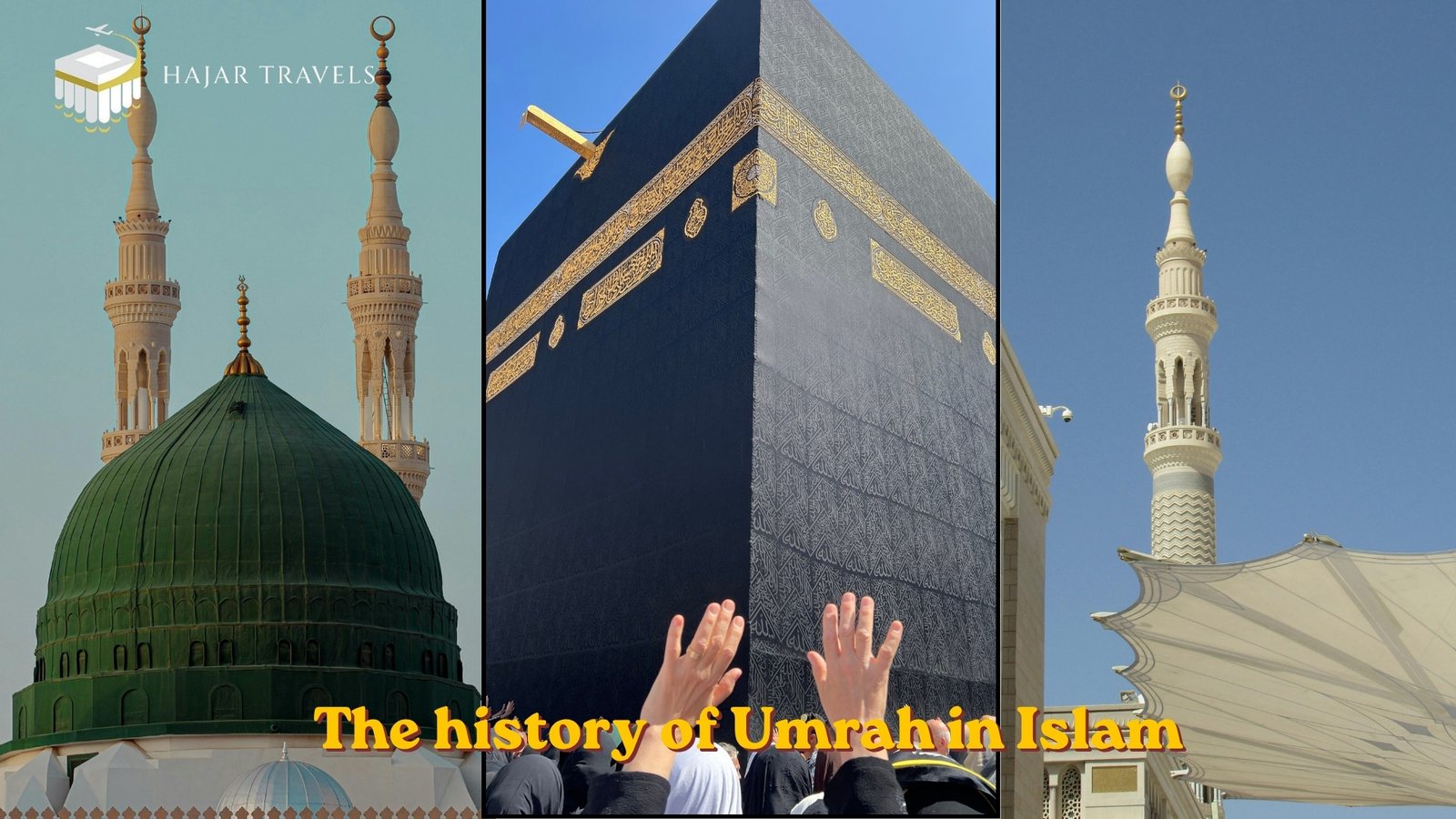
Each year, Muslims all around the world go to the holy city of Mecca in order to perform the Umrah. It is a very significant spiritual journey and one that offers the chance of cleansing, forgiveness and redemption of faith. Hajj is one of the pillars of Islam, but only those who can undertake the journey can practice it, whereas Umrah is a Sunnah that is highly recommended and can be practiced all year round.
The historical background of this holy tour is enriched. Mecca takes you through the steps of the prophets and the early Muslims as you travel through.The ceremonies of Umrah are replete with pain, struggle and eventual victory of Prophet Ibrahim (Abraham), his wife Hajar and his son Ismail. These rituals were institutionalised by Prophet Muhammad (peace be upon him).
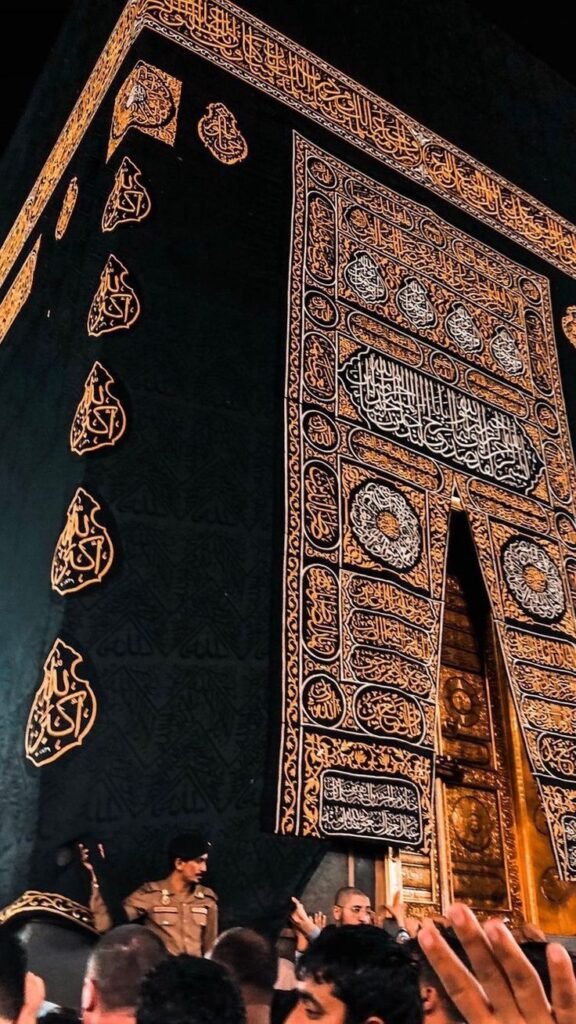
The origins of these rituals also should be known and it will enable the contemporary pilgrims to enhance their spiritual experience. Discussing the history of Umrah we may refer to the fact that it is great honor nowadays to visit the Kaaba.
Securing Your Journey: Umrah Packages 2026 USA
Travelling on pilgrimage is a big undertaking to Muslims in North America and must be well organized and reinforced. Hajar Travels will ensure that this spiritual pilgrimage is convenient, comfortable and fulfilling. Our Umrah Packages 2026 USA are a hassle-free experience as you embark on your future spiritual journey. We do all the complex arrangements, visa, best hotels and sightseeing, and you can focus on your devotions. Early booking will enable you to get the most suitable accommodation and arrangements with your family and this historic journey will be performed with utmost confidence.
The Origins and Early History of Umrah
Umrah has its roots in the building of the Kaaba. Islamic sources state that the Kaaba was built by Prophets Ibrahim and Ismail (or Ishmael) at the behest of Allah as the first "house of God".
The Trials of Hajar
The Umrah rituals are a reminder of the struggle of Hajar. Hajar was alone as she and her baby son Ismail were in the dry desert valley of Mecca. She made seven journeys between the hills of Safa and Marwah. The miraculous appearance of the well of Zamzam was due to her faith in Allah.Pilgrims continue to re-enact the Sa’i, passing between the same hills, to this day, in memory of her unshaken faith.
The Pre-Islamic Era
Ibrahim would go on to become one of the leading pilgrimage sites in the Arabian Peninsula even hundreds of years later. But the monotheistic practices were beginning to change. The Mecca tribes filled the sacred location with idols. Although they continued to practice pilgrimages, which involved circumnavigating the Kaaba, monotheism had been replaced by polytheism. It is in this place that Prophet Muhammad grew up.
The Treaty of Hudaybiyyah
The purest, Islamic form of Umrah began to be institutionalised during the era of Prophet Muhammad. Six years following the Prophet migration (Hijrah) to Medina, he had a vision that he and his followers were entering Mecca to visit Umrah. He decided to follow this command and sent a large group of Muslims to carry out Umrah. They peacefully went to Mecca in the state of Ihram, unarmed.
At Hudaybiyyah, the Quraysh, the reigning tribe of Mecca prevented the Muslims. There was a standoff however a peace deal brokered by the Prophet was the Treaty of Hudaybiyyah. It enabled the Muslims to visit Medina that year without undertaking the Umrah but they would have permission to visit the place the following year to have three days to finish their Umrah.
The First Islamic Umrah (Umrah al-Qada)
In 7 AH, a year later, prophet Muhammad and his followers returned to Mecca. The Quraysh temporarily left the city and the Muslims entered the city peacefully. This is known as Umrah al-Qada (the completed Umrah).
In this period, the Prophet showed the right fulfills of the pilgrimage. He laid down the regulations of Ihram, the technique of performing Tawaf (seven times round the Kaaba), and the Sa'i between Safa and Marwah. He also guided the hair cutting to end the state of Ihram. Thus he made the pilgrimage as pure an Abrahamic one as possible, and he removed the pagan additions that had come over the centuries.
The Evolution of the Pilgrimage
After the peaceful capture of Mecca in 8 AH, Kaaba was finally purged of all idols. Umrah and Hajj became the important elements of Islamic worship, which is free to all believers in the world.
The Ottoman Era and Infrastructure
With the expansion of the Islamic empire the pilgrims who visited Mecca increased exponentially. Several caliphates and empires assumed the role of taking care of the holy sites. The Ottoman Empire, especially, contributed greatly to the structural extensions of the Masjid al-Haram. They constructed elaborate porticos, enlargement of the prayer spaces and also made sure that the trade and pilgrimage paths into the Hijaz region were safe.
The Modern Era
The modern age has seen the Mecca landscape change drastically to cater to millions of visitors at a time. The Grand Mosque has experienced colossal extensions under the supervision of the Saudi government. The Sa'i have been introduced to air conditioning, escalators and multi level walkways to prevent pilgrims being exposed to the intense desert heat as well as to provide safety in times of peak crowds. With all these technological changes, the fundamental spiritual practices of Prophet Muhammad are still exactly the same.
Prepare for Your Pilgrimage with Umrah Packages 2026 USA
The legacy of this holy pilgrimage is a symbol of the persistence of faith and attending it is a significant milestone of every Muslim. It takes a trustworthy companion to plan such a trip, one who will know the spiritual and practical needs of the modern pilgrim. Hajar Travels, by booking our Umrah Packages 2026 USA, ensure that your trip will be done with the highest care and professionalism. We also offer professional guides, who will assist you to explore the historical sites, so that you can know the rich history of each ritual you practice. You take care of the details, and I will prepare my heart to go on a journey of a lifetime.
Continuing the Sacred Tradition
Umrah is a tale of devotion, sacrifice and the reinstatement of pure worship. Since the frantic efforts of Hajar to find water to the glorious day when the Prophet Muhammad returned to his homeland Mecca, each of the pilgrimage steps is full of historical significance. Putting on the plain white clothes of Ihram, you drop the worldly concerns and become part of an unbroken procession of faithful that has been running thousands of years. May all pilgrims who go to the holy city have their faith restored and prayers heard.